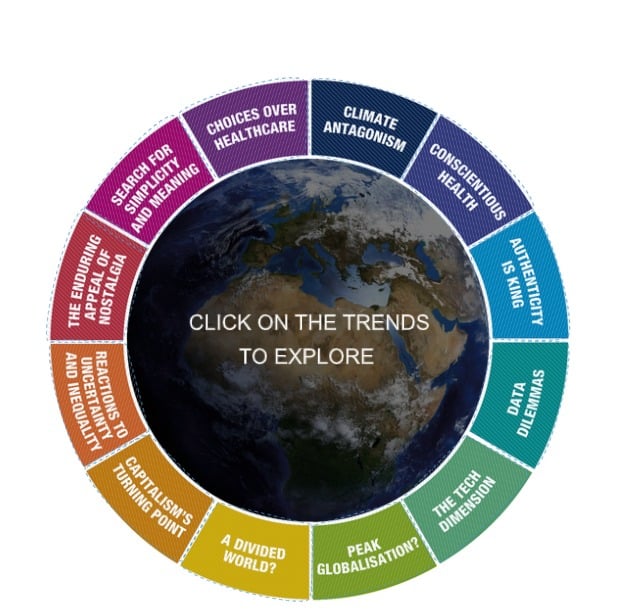
The Way The World Looks Is Changing- The Forces Driving It In The Years Ahead
The 10 Finance Pieces Of Advice Everyone Ought To Know In The Years AheadManagement of money properly has never been straightforward however, the current financial landscape of 2026/27 is a unique set of challenges and opportunities. Inflation, changes in interest rates changes in job markets and a flurry of brand new financial tools have changed the environment in which people are making everyday financial choices. But the basic concepts remain extremely consistent. No matter if you're just beginning to think about your finances or looking to improve the habits you already have this list of ten personal financial tips provide a dependable starting with which to make their money work harder.
1. Make an emergency fund prior to Anything ElseEvery sound piece of financial advice will eventually come back to this. Before you invest, before taking the first step towards eliminating debt, before anything else, you'll need an emergency fund. Three to six months of living expenses held in a savings account is a good the protection you need against job loss, unexpected expenses or the sort of incidents that can thwart even the most carefully laid financial plans. Without this foundation, one poor month can sabotage years of progress elsewhere. It is not the most exciting way to use money, but it's the most important one.
2. Be aware of where your Money Actually GoesA majority of people have a basic estimation of their incomes but a surprisingly vague picture of their expenses. It is true that tracking spending, even in an entire month, often leads to reveal unexpected patterns. Subscription services accumulate quietly. The amount of food you spend is usually underestimated. Little purchases that are routinely made add up faster than our intuition would suggest. Before you begin to create any financial plan, it is worth getting an accurate baseline. Budgeting applications have made this simpler than ever However, a simple spreadsheet works just as well in the event that you're able to make use of it regularly.
3. Deal with high-interest debts as a PriorityCredit with high interest rates, particularly with credit card debt, can be among of the most costly and risky financial practices. Revolving credit rates could reach 20 percent or more annually, which means that each time the debt is unpaid and the problem becomes more severe. Paying off high-interest debt offers you a certain return, which is equivalent to the interest rate charged, which is usually higher than every other investment option that is available at the same risk level. If multiple debts are in play you can choose to use either the avalanche strategy using the one with the highest interest rate first or the snowball technique in which you pay off the least debt first to gain psychological momentum can help create a sustainable structure.
4. Be Early to Invest and Stay ConsistentThe maths behind compound growth rewards time over almost everything else. Investments that are consistent over a long duration produces outcomes that outweigh larger sums earlier, even when the returns aren't as high. The idea of waiting until your finances are comfortable enough to invest is a mistake, since that threshold will not be reached by itself. Starting small and staying consistent during periods that are volatile, can help build both financial rewards and the discipline that makes long-term wealth accumulation possible. Index funds and portfolios with low costs are the most reliable start point for a majority of people.
5. Maximise Tax-Advantaged AccountsMany countries provide a form in tax-advantaged savings or an investment vehicle, whether it's a pension, an ISA or the 401(k), or something equivalent. These accounts are specifically designed to help reduce the tax burden on savings for the long term, and being unable to fully utilize them is leaving money on table. Pension contributions from employers, if provided, offer a rapid and guaranteed return that no investment is able to match. Understanding what is available in your tax jurisdiction and utilizing these accounts to their limits before investing in taxes-exempt accounts is among the most high-leverage financial choices individuals can make.
6. Make sure you are protected with Adequate InsuranceFinancial planning focuses on creating wealth, but making sure you protect what you already have is equally crucial. Income protection insurance, life insurance and critical illness policies remain undervalued until moment they are needed. For families that rely on their earnings and their ability to earn, the financial burden of being unemployed due to injuries or illness can become catastrophic if no proper coverage is that is in place. Checking the insurance needs often particularly following significant life changes such as having children or taking out one, is a basic but frequently skipped essential step to ensure that you have a solid financial plan.
7. Be Conscious About Lifestyle InflationWhen income grows, spending increases and often without conscious thought. Making improvements to vehicles, housing, vacations, and other habits closely with earnings growth is one of the primary reason why we reach middle age with high incomes however limited financial security. It is important to be aware of which improvements to your lifestyle really make a difference as opposed to simply the most cost-effective option is a habit that distinguishes those who accumulate wealth over long periods of time from those that feel that they have earned enough but never quite have enough.
8. Diversify Income Whenever PossibleRelying solely on one income source carries more risk than it was in an employment market that continues to grow rapidly. It is important to create additional streams of income, be it through freelance, a side venture, investment income, or the monetisation of a ability, creates an income buffer and optionality. It's not a dramatic pivot or enormous cost to get started. Many viable secondary income sources are merely side-projects which increase gradually. The idea is to minimize the risk that is associated with every single financial failure.
9. Review and revise recurring Costs Frequently
Fixed monthly expenditures, including insurance premiums, utility bills rate for mortgages, subscription services are often not optimized automatically. Service providers typically reserve their best rates to new customers. This means loyalty is often punished rather than given a reward. A routine of reviewing significant recurring costs every year and negotiating or shopping around when possible can yield significant savings with minimal effort. This money is less than spectacular on a monthly basis, but when redirected repeatedly it will grow into something substantial in time.
10. Educate Yourself ContinuouslyFinancial literacy is not an easy task to complete once. Tax laws evolve, new products are introduced as economic conditions shift and the personal situation changes. Individuals who are aware of their financial situation make better choices more frequently that those who hand over their financial knowledge entirely to financial advisors or rely solely on prior knowledge. This doesn't require a great deal of understanding. A lot of reading, asking the right questions and ensuring that you have a good understanding of how tax, borrowing, investment, as well as taxes interact will help you avoid costly mistakes and make the most of the opportunities you have.
Good personal finance is less about finding clever shortcuts and more about implementing only a few sound rules consistently over a lengthy time. The above tips can help. For additional info, explore a few of the most trusted culturazona.es/ to read more.
 Ten Renewable Energy Developments Driving The Future In The Years Ahead
The shift to energy is the major industrial transformation that has taken place in the present modern age, changing the structure of economies geopolitics, infrastructure, and daily life in a manner and speed that continues shock even those who've been watching it closely. Renewable energy has shifted from an idealistic goal to the economically dominant choice for new power generation in most of the world, and the momentum behind that shift has been growing instead of slowing. There are still challenges to overcome. substantial and real, however they're largely the burden of navigating a shift that is already taking place instead of debating whether it should. Here are the 10 renewable energy developments that will shape the future of 2026/27.
1. Solar Power Continues Its Extraordinary Cost ReductionThe solar photovoltaic system has followed a learning curve that has become the most economical power source ever recorded in the majority of markets, and prices remain low. Every time the cumulative installed capacity has resulted in predictable price reductions that have repeatedly exceeded even the most conservative estimates. It is now the primary option for new generation capacity in the majority of the world and the number of projects currently in development is larger than anything seen previously. The primary challenge is finding ways to make solar cost-effective enough for build, to managing the grid integration implications of deploying it in the size that business models now allow.
2. Offshore Wind Can Grow Quite a bitOffshore wind has matured from a niche technology that is expensive into a widely used power source capable of generating at the scale needed to make a substantial contribution to national grids. Turbines are getting bigger as well as installation techniques are improving and costs are decreasing as the industry accumulates experience and supply chains become more stable. This type of offshore wind, which can be installed in deep waters that have fixed foundations, which are not practical, is moving away from demonstration projects to commercial scale, allowing immense new resources which fixed-bottom technology is unable to access. Countries that have significant offshore wind power resources are investing large in the ports, vessels, and grid infrastructure needed to tap into them.
3. Grid-Scale Energy Storage is the Critical BottleneckThe intermittent nature of solar and wind power, that generates electricity only when the sun is shining and the wind blows, make battery storage the vital enabling technology for the transition to renewable energy. Battery storage on grid scale is growing faster than any projections forecast driven by a rapid drop in lithium-ion costs and the urgent necessity for flexible grids that are dominated by renewables. Beyond lithium-ion is a range of longer-lasting storage technology, such as flow batteries or compressed air, gravity-based systems, as well as thermal storage are advancing toward commercial deployment to address the shortages in storage over a period of time and during the seasons that batteries can't cover efficiently.
4. Green Hydrogen Finds Its Niche ApplicationsThe enthusiasm over green hydrogen as a clean energy universal solution has given way to a more objective evaluation as to where it makes sense. The process of electrolyzing water to produce hydrogen using renewable electricity is energy-intensive and can only work in specific applications where direct electrification is not practical. Heavy industry, like cement and steel processing, and long-haul shipping as well as aviation, are sectors where green energy has the most convincing case. Capital investment in electrolysis capacity hydrogen transportation infrastructure and industrial offtake agreements is increasing in these areas, with a realism about times and prices that earlier projections sometimes failed to provide.
5. Transmission Infrastructure Becomes A Defining ChallengeRenewable generation capacity building is no longer the main restriction to the energy transition in a variety of markets. The process of bringing electricity from the place it is generated, typically in areas chosen for the solar or wind power and not their proximity to need, and where it's needed is increasingly the biggest obstacle. Modernisation and expansion to the transmission grid is one of most urgent infrastructure challenges for all of Europe, North America, and further. Planning, permitting and community acceptance issues that are associated with the construction of new transmission lines are typically more complex in comparison to engineering, and tackling them is drawing substantial attention from the policy world.
6. Nuclear Power Experiences A Significant ReassessmentNuclear energy is under an important reassessment by countries that had shifted away from it. The combination of energy security concerns, targets for decarbonisation and the realization that a grid that runs on very high proportions of intermittent renewable energy requires significant energy that can be dispatched and low in carbon has brought nuclear energy back into the forefront of discussion about policy. Small modular reactors that promise lower upfront capital costs along with advantages for factory production as well as greater flexibility to deploy that conventional large nuclear facilities, are moving through legal approval procedures and are now beginning to attract significant investment. Whether they can deliver on that promise at the scale and timeline required remains to be established.
7. Rooftop Solar and Distributed Energy Redesign The GridThe rising popularity of rooftop solar and electric appliances, home batteries, electric vehicle charging, as well as digital control systems is creating the concept of a distributed energy system that is vastly different from the centralised generation model and passive consumption that grids for electricity were designed around. Businesses, householders and consumers that both consume as well as produce electricity, are my website becoming an integral component of the majority of grids. The management of two-way flows, local voltage management problems, and the aggregation of distributed resources into grid-related services require new markets, regulatory frameworks, and grid management techniques that utilities and regulators are working to develop.
8. Corporate Renewable Energy Procurement Drives New InvestmentLarge corporations have become a major player in renewable energy development thanks to lengthy power purchase agreements that ensure the revenues developers require to finance new projects. Technology companies with enormous electricity consumption fueled by data centre expansion are among the most active purchasers of renewable energy from corporations but this is spreading across different sectors. Corporate procurement is not only stimulating new capacity, but deciding the locations where it will be built to accelerate development in localities and markets that might normally be left to wait for policy-driven investment. The reliability of corporate renewable promises is under growing scrutiny, pushing for better standards in what is truly renewable procurement.
9. Energy Efficiency Receives Renewing AttentionThe most affordable unit of energy is energy that doesn't need to be produced, and energy efficiency is receiving renewed spotlight as a vital component to renewable energy deployment. Retrofits for buildings that significantly cut the demand for cooling and heating, industrial process optimization, energy efficient electric motors and appliances along with urban planning that lowers the demand for energy in transport are all receiving funding and support from policymakers at a greater scale. Heating pumps, which collect heat from the air or ground rather than generating it from using fuel to generate it, constitute a particularly significant efficiency improvement technology. They will replace gas boilers in buildings across Europe and beyond with systems that generate three to four units of energy for every watt of electricity used.
10. Access to Energy Increases Using Decentralised RenewablesFor the more than seven hundred millions of people throughout the world who don't have electricity access, an effective and practical solution in most cases isn't having to wait around for grid extension instead, deploying decentralised renewable systems including solar power at community or household level. Mini-grids and solar home systems are bringing electricity access for the first time to communities in sub-Saharan Afrika, South Asia, and Southeast Asia at a pace and at a cost central grid extension cannot compete with in remote regions. The positive impact of reliable access to electricity in terms of healthcare, education economic activity, and overall quality of life is enormous, and renewable technologies are delivering it to people who might otherwise have waited for decades for grid access to arrive.
The energy transition towards renewable sources is one of the most profound shifts that have occurred in the history of industrialization. the changes above are indicative of a transformation that is now driven as much by momentum and economics as by policy ambition. There are many challenges that remain yet becoming more clear. The solution requires a long-term investment, political will, and the type of systematic problem solving that the energy sector, at its very best, is capable of. The direction has been determined. Now the work begins the implementation. To find additional info, check out some of the most trusted storycircuit.us/ and get trusted analysis.